I'm reading a Junie B. Jones book with my daughter right now. I'll read a page or two then she'll read a page or two. Working together on this charming book is good for both of us: good for her as she stretches her ability to concentrate and good for me as I learn about being a "Shellfish."
Friday, March 27, 2015

Wednesday, March 25, 2015
I Want to Know More About...
I want to know more about...
Have you ever thought that about some Biblical theme? Maybe you had a discussion with a sister about giving, and she said something you never thought of before. Or perhaps you are teaching a class on the work women do in the church, and you need to study up on what the Bible says. You aren't looking for a deep exhaustive study, just a general idea of the way the Bible addresses a specific theme. I've been in similar situations countless times; if you have too, then this Bible study method is for you.
Monday, March 23, 2015
Easy Like Sunday Morning?

I just want to begin by saying that Lionel Richie has never spent Sunday morning at my house. That "Easy like Sunday Morning" deal is a joke. Not only is the routine entirely different from the normal Mon-Fri, but often Saturday's soccer game or late night Netflix binge bleeds over to leave everyone tired and cranky.
Sunday, March 22, 2015
After Acts: A Book Review
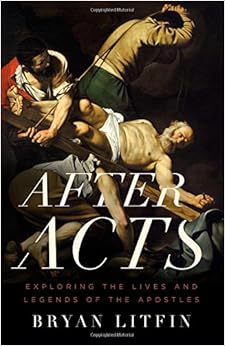 All of the apostles except John were martyred. Peter was crucified upside down because he refused to be killed in the same way Christ was. Paul went to Spain, and Matthew evangelized cannibals. I've heard these statements all my life, and although I knew they weren't recorded in the Bible, I assumed that the stories were based on reliable historical fact. When I read After Acts: Exploring the Lives and Legends of the Apostles, by Bryan Litfin, I was surprised to find out that "early church tradition" isn't as reliable (or as early!) as I had thought.
Friday, March 20, 2015
We're Going to Write About Sin
We're going to write about sin
Why? Why would Helene and I, who have made a habit of staying positive here at Maidservants of Christ, decide to start writing about negative things? Attitudes we shouldn't have and actions we shouldn't take seem like such a downer. There are several reasons, really, all based on the studies we are currently doing in our own lives.
Wednesday, March 18, 2015
A Shepherd looks at Psalm 23
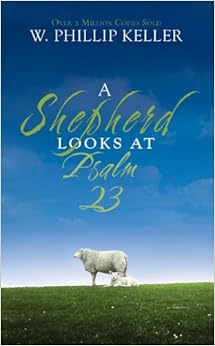 As I was looking around for a good book to read, last week my eye stumbled on A Shepherd looks at Psalm 23 by W. Phillip Keller. It was lingering in my bookshelf because it had been a Christmas gift from a member at our church to my husband. The book was instantly treasured simply for the words of blessing she had inscribed on the front cover, but I hadn't taken time to read it yet.
I was intrigued by the background of the author first. Raised in African sheep country, once a sheep rancher and then a minister, he had a uniquely appropriate background to explain the Psalm. Not only that, but as a widower he had first-hand experience with the "valley of the shadow of death."
I enjoyed the book for the light he shed on detail. Did you know a shepherd's rod and staff are different? The rod is a club used in the sheep's defense. He talked about the skill with which African shepherds can hurl that rod at the animals that prey on the herd. The staff on the other hand is used to guide the sheep. This I knew having seen Asian shepherd nudge their flocks the right way using the long crooks. What a comfort to have both God's protection as well as his guidance!
Metaphor abounds in the Psalm, and Keller brings out every nuance. He spoke of the oil that shepherds use. First they use oil to fight flies and other parasites. A second more serious use is to prevent a highly contagious skin disease called "scab." The sheep catch scab by rubbing heads. Almost he said, the way that Christians rubbing minds with the world around us bring ruinous ideas and thoughts back to our churches and our families. Finally during mating time the oil is used with great effect on the fighting rams. The rams would butt each other with their heads and horns, damaging not only the peace of the flock but the health of their brothers. So the shepherd would smear axle grease all over their heads, so they sort of slid off each other. I couldn't help but snicker as he described the "sheepish" look on their faces (some of us need to look more sheepish after trying to attack our brothers). He compares that oil and grease to the Spirit which helps all of us keep our minds clean and in love teaches us to smooth the way between brothers. (Galatians 5:22, Romans 5:5)
The book wasn't difficult, no tome of theology here. Any child of 10 could have read and understood it. Yet it lingers with me. I've been teaching my preschoolers the story of the good Shepherd. Over and again in the simplest language I can devise, I tell them Jesus loves them, that he is their shepherd, that he keeps them safe and helps them when they are lost and scared. The truth of those simple facts has impressed itself upon me very deeply this week. I'm glad W. Phillips Keller brought his shepherding to life!
Helene
Monday, March 16, 2015
The Care and Feeding of Trolls

You have trolls in your life, don't you? Me, too.
Happily they don't gather in my own congregation, and I tend to stay away from places (real life or internet based) where they do. But should I?
That's the question of the day.
Subscribe to:
Posts (Atom)